 : +1 308-7304-232
 : +44 (744)-139-7094
 : +61 4 8080-3582
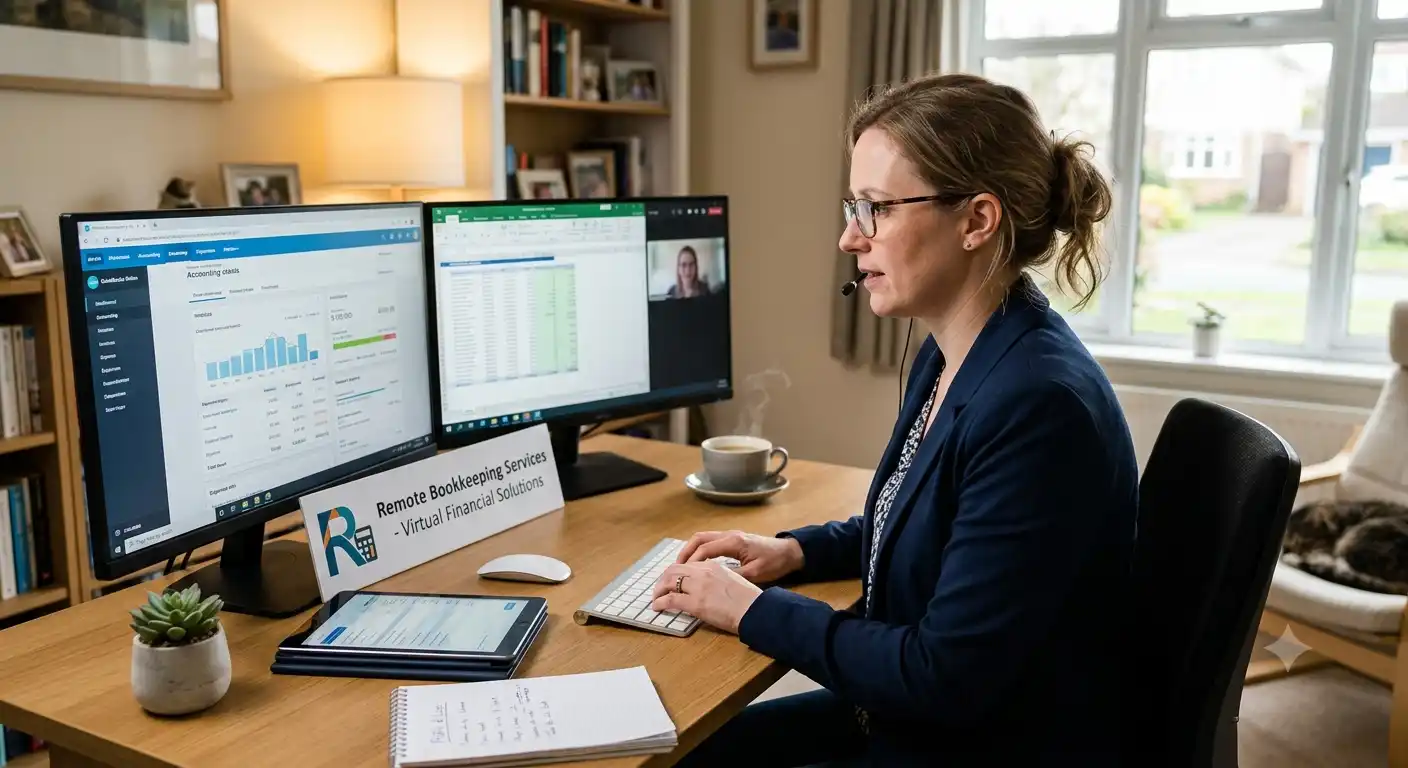
The old image of the bookkeeper in the office with mountains of paper ledger books is long gone in the modern corporate world. With the drive towards digitalisation, remote bookkeeping is no longer just a nice to have, it's now a necessity for businesses of all sizes. The move to remote bookkeeping is a direct result of cloud technology, automation and the changing nature of the workforce. It's moved from being a handy option to a strategic requirement. This article looks at how remote bookkeeping works, the benefits it brings, the key technologies underpinning the industry and how you go about selecting the right remote bookkeeping provider to put the financial health of your business on a solid footing.
Understanding Remote Bookkeeping Services
Remote bookkeeping involves the management of a company's books from a remote location using cloud based accounting software and a range of digital communication tools. The actual work of the remote bookkeeper is precisely the same as that of a traditional, in-house bookkeeper. They will be responsible for recording the day to day transactions, classifying the expenses, reconciling the bank statements, managing the AP and AR and producing the correct financial statements. The only difference is that they are based remotely.
Rather than passing physical paper receipts and invoices back and forth across the office desk we have completely digitised all our financial documentation and have it stored in a secure online location. Both the business owner and the remote accountant have real time access to the same information ledger so there is complete visibility with no operational constraints due to distance.
How Remote Bookkeeping Operates: A Step-by-Step Workflow
Understanding the day to day mechanics of a remote bookkeeping partnership goes a long way to explaining how the offsite bookkeepers can keep such accurate records. The process is essentially a very well synchronised 4 stage process.
1. Secure Software Integration
The onboarding kicks off with secure access. Rather than passing around master passwords, the business owner will provide the business with dedicated view-only credentials for their business bank accounts, credit cards and existing accounting platforms. QuickBooks Online and Xero for example allow the primary user to assign specific role based access permissions to the external bookkeeper.
2. Automated Financial Data Extraction
Modern bookkeeping is no longer about the drudgery of manual data entry. Bank feeds are now securely linked to the cloud accounting software so that the entire transaction history is automatically downloaded on a daily basis. For actual out of pocket expenses (receipts, receipts, vendor invoices etc) you can use mobile scanning apps such as Ramp or Hubdoc. These apps use OCR (Optical Character Recognition) to pull the key data points (date, merchant, amount) from the receipt and then upload them directly into the system.
3. Continuous Categorisation and Reconciliation
On a regular weekly or monthly basis the remote bookkeeper will log into the system to audit the automated data streams. They will then post the expenses to the appropriate ledger accounts (software, inventory, marketing etc) and will reconcile the balances against the bank statements to ensure that every single dollar is accounted for.
4. Delivery of month end financial statements
Once the books are officially closed for the month the remote bookkeeper will put together the key financial statements (the P&L, the Balance Sheet and the Statement of Cash Flows). Rather than just send over a pile of raw spreadsheets they will produce a clean executive summary of the financial performance of the business.
The Financial and Operational Advantages of Going Remote
Switching from a traditional in-house bookkeeper to a structured virtual service is a very significant proposition in terms of the actual bottom line and the flexibility it brings to the business.
Substantial Cost Efficiency
Hiring a full time in house bookkeeper is a very expensive proposition. The BLS data shows the median annual wage for an in house bookkeeper is just under $50k. When you factor in the other mandatory costs (payroll taxes, health insurance, pension contributions, paid time off, office space and the like) the real cost is substantially higher.
In stark contrast, remote bookkeeping operates on a predictable flat rate monthly subscription model which scales with transaction volume. A small business can get access to expert level daily bookkeeping at a tiny fraction of the cost of an in house salary and the result is typically a 40% to 60% reduction in their overall operational accounting overhead.
Access to Specialized, Elite Expertise
When you're limited to local recruitment your talent pool is entirely defined by where you are. If the local market doesn't have the experienced accountants you need then you're in a right old mess. Remote outsourcing removes those geographical constraints entirely and gives you instant access to highly qualified professionals who are specialists in specific verticals (e-commerce, professional services, medical practices, not for profit etc).
Seamless Scalability
A business that's growing will see a massive increase in transaction volume, vendor invoices and the complexity of the payroll. A single in house bookkeeper is going to get stretched to the limit very quickly and end up with a backlog of work and a high risk of errors in the documentation. A remote bookkeeping firm will have an elastic team of bookkeepers, staff accountants and CPAs that it can deploy. As the business grows and expands its operations the remote service can scale up the level of support it provides without the owner having to go through the hassle of recruiting, onboarding and training any new staff.
Unprecedented Flexibility and Real-Time Data Access
Traditional bookkeeping tends to see you waiting weeks after the month is up to get your past statements. With virtual bookkeeping you're constantly fed the latest financial data so your records are always up to date. A founder anywhere in the world, whether they're on a trip or working from home, can log into their dashboard at any time and have access to the exact cash flow data. That gives them a very clear picture of where they stand and a clear path to making fast, informed decisions.
Essential Technology Architecture for Remote Bookkeeping
The explosion of virtual bookkeeping is driven by an integrated ecosystem of cloud based software applications. The remote bookkeeper is effectively the financial architect, bringing all the disparate pieces of software together to form a complete financial workflow.
Core Cloud Accounting Ecosystems
QuickBooks Online is the de facto standard for accounting for small to medium sized businesses in the US. It has a huge number of app integrations and very solid native payroll.
Xero: Highly regarded for its clean, straightforward user workflows and superb multi-currency support. It's a very popular choice with remote first international businesses and tech start-ups.
Zoho Books: an absolutely superb financial management system which integrates so seamlessly into the wider Zoho enterprise.
Financial Automation and Expense Architecture
To get rid of the paper and the manual tracking entirely remote services use a range of sophisticated supporting integrations. Bill.com for example takes the entire accounts payable process and turns it into a digital one, enabling the business owner to approve a vendor's invoice with a single tap on their mobile phone. Expense management tools will automatically capture the digital invoice and then attach it to the relevant transaction in the main ledger, creating a rock solid digital audit trail.
Industry Trends Shaping Remote Bookkeeping
The virtual accounting sector is in a state of rapid flux, driven by the changing nature of the global workplace and a host of technical innovations.
The Rise of Nearshore Dedicated Talents
A big one is the use of nearshore remote bookkeepers (particularly from Latin America). The alternative to traditional offshore outsourcing is generally the nightmare of time zones and communication lag. The nearshore option is to have someone who is working in the same time zone as you, who is fully immersed in the US business day and who is of course extremely proficient in English. It's a model which enables a small business to have a full time virtual bookkeeper on their books at a very low cost and with the benefit of real time working.
AI-Driven Augmented Workflows
AI isn't going to replace the bookkeeper. It's going to transform the bookkeeper into a strategic advisor. The modern cloud platform uses embedded machine learning to instantly categorise expenses correctly and to flag any anomalies or potential fraud. It's about automating the repetitive data entry so the human bookkeeper can focus on the accuracy of the data and on the strategic advisory work that will actually help the owner grow their business.
How to Select the Ideal Remote Bookkeeping Service
Choosing a financial partner is a process which requires some serious thought. To avoid a bad experience you need to look at the various providers across a number of key criteria rather than just go on price.
Data Security Frameworks: The provider must require MFA, use robust end to end data encryption and have a strict role based access model.
Clear peer review workflows: find out who actually reviews the books prior to them being handed to you. A good firm will have a clear quality control process in place with a senior staff accountant or manager reviewing the work of the primary bookkeeper.
Industry experience: a retail business with a complex physical inventory is a very different proposition to a service business which is tracking billable hours. You need to pick a service that has demonstrable experience in your particular industry.
Predictable pricing structures: Avoid the firms that will charge you on an opaque hourly basis for a basic standard reconciliation. Look for clear, volume based flat rates so your accounting costs are predictable as your business grows.
Moving to a virtual bookkeeping service is more than just a cost saving. It's a fundamental re-structuring of your business model. You're combining the power of automation with the expertise of a human professional to free the business owner from the day to day admin and leave them free to focus on growing the business with complete financial transparency.
FAQs
1. What is a remote bookkeeping service?
A remote bookkeeping service is a professional bookkeeping service where a qualified bookkeeper will take care of your company's books from a distance. They'll use secure cloud software, internet bank feeds and a range of digital document platforms to record your transactions, reconcile your statements, track your AP and AR and provide you with your financial reports. You don't need to have a physical office to benefit from this service.
2. How do remote bookkeepers access my financial data safely?
Remote bookkeepers access data through secure, view-only credentials granted directly within cloud platforms like QuickBooks Online or Xero. Business owners retain master ownership of their financial accounts and utilize role-based permissions, ensuring the bookkeeper can only view transactions and input data without having authorization to withdraw funds, move money, or alter primary banking structures.
3. Will I still need to pay for accounting software if I hire a remote bookkeeper?
Yes. In almost all instances, a dedicated cloud accounting software subscription is a fundamental requirement for a remote service. While some outsourced bookkeeping firms bundle the cost of the software directly into their monthly subscription flat rate, many require you to maintain your own separate account so that you retain complete, permanent ownership of your historical financial data.
4. What is the core difference between a remote bookkeeper and a CPA?
Bookkeepers are responsible for the daily and monthly organization of financial data, including transaction categorization, bank reconciliations, invoice management, and generating core financial statements. Certified Public Accountants (CPAs) build upon that organized data to perform high-level tax planning, complete annual corporate tax filings, execute formal financial audits, and offer long-term strategic financial advisory services.
5. How much do remote bookkeeping services typically cost?
Fees are heavily dependent on your overall monthly expense volume, total transaction counts, and the number of active bank or credit card accounts. For standard small businesses, remote bookkeeping packages generally range from $150 to $700 per month on a flat-rate subscription structure. This provides highly predictable billing compared to traditional, variable hourly rates.
Is my sensitive data safe with a virtual bookkeeping firm?
Reputable virtual bookkeeping firms implement institutional-grade security protocols. These include end-to-end data encryption, mandatory multi-factor authentication (MFA) across all platforms, secure file transfer portals, and binding non-disclosure agreements signed by all staff members. This combination of tools makes cloud-based financial tracking substantially more secure than storing physical financial documents in a local office cabinet.
7. Can a remote bookkeeping service help clean up my past messy financial records?
Yes. Most professional remote bookkeeping firms offer specialized "catch-up" or "historical clean-up" services. If a business has fallen behind on its books for several months or even years, the remote service will charge a one-time onboarding fee to audit past bank statements, resolve historical reconciliation errors, categorize missing expenses, and bring the ledger into full compliance.
Ready to Scale Your Business?
Connect with our experts to learn how our outsourcing solutions can drive growth.
BOOK A DISCOVERY CALL