 : +1 308-7304-232
 : +44 (744)-139-7094
 : +61 4 8080-3582
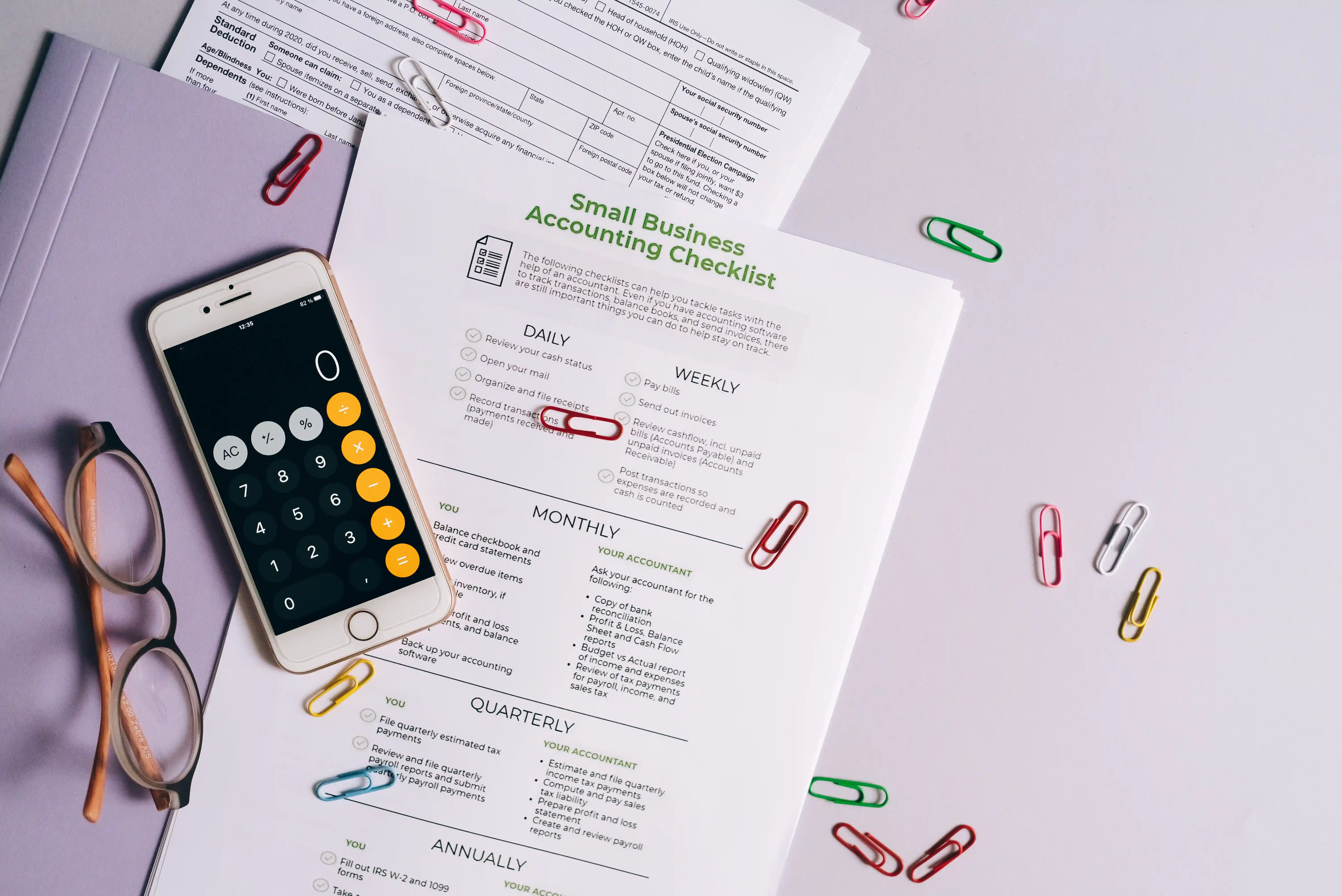
Small Business Accounting Best Practices: A Complete Financial Blueprint for Growth
Running a successful small business requires so much more than just a great product and a loyal customer base – it requires total financial transparency. A large number of business owners will treat accounting as an afterthought and only get around to it once a year during tax time when they're fumbling through shoeboxes of receipts and all manner of uncategorised bank statements. That reactive approach leads to a complete lack of visibility into your cash flow, missed tax deductions, compliance penalties and ultimately growth that is simply stalled.
Implementing the proven small business accounting best practices turns your financial back office from a nightmare of admin into a real decision making engine. If your books are clean, accurate and up to date then you'll know precisely where your cash is going, which of your products are the most profitable and when you can safely start to invest in growth.
Here's an actionable, step-by-step guide to the essential small business accounting best practices, the common mistakes to avoid and how utilizing outsourced accounting support enables you to grow without the associated overhead.
1. Strictly Separate Business and Personal Finances
The basic rule of small business accounting is to keep your personal bank accounts completely separate from your business accounts. Don't mix the funds at all. Don't pay your own groceries out of a business debit card, don't deposit client cheques into your personal savings account etc etc. That would be an accounting nightmare.
Open dedicated accounts: a dedicated business checking account, a business savings account for your tax reserves and a business credit card all under your company’s EIN.
Protect your legal liability. If you're operating as an LLC or a corporation, the mixing of personal and business funds can "pierce the corporate veil" and in that situation your personal assets (your home, your personal savings etc) can be exposed to a business judgement or a claim by a creditor.
Simplify tax preparation. Having dedicated accounts means every item on your business statement is a genuine operational activity and that in itself will slash your year end tax prep fees and your audit risk.
2. Choose the Right Accounting Method Early
Before recording transactions, you must select the accounting framework that fits your business structure and growth trajectory:
Cash basis accounting: income is only recorded when the cash actually hits your bank account and expenses are only recorded when the cash leaves. It's simple, it's easy to run and it's perfect for a sole trader, a freelancer or a micro business with no inventory.
Accrual basis accounting: revenue is recognized when it's earned (i.e. when you issue the invoice) and expenses are recognized when they're incurred (i.e. when you receive the vendor's invoice) irrespective of when the cash actually changes hands. It gives a far more accurate picture of long term profitability and is generally required if you have inventory or if you've passed certain IRS revenue thresholds.
3. Adopt Cloud Accounting Software and Automation
Manual spreadsheets are susceptible to broken formulas, version control issues and hours of wasted data entry. Modern small business accounting best practice is to use cloud-based platforms that sync directly with your banks.
Core General Ledger: platforms such as QuickBooks Online or Xero will automatically pull in your daily bank and credit card feeds so you can categorize them in minutes rather than hours.
Automated receipt capture: link your ledger to an OCR app such as Dext or Hubdoc. Take a photo of your paper receipt on your phone and the software will automatically extract the vendor name, date, tax amount and category. This gives you fully audit-proof digital storage.
Streamlined invoicing and bill pay via integrated tools such as Bill.com or Stripe to automatically send out invoice reminders to your clients and schedule your electronic ACH vendor payments (no more writing out paper checks).
4. Reconcile Bank and Credit Card Statements Monthly
Never assume your accounting software balance is the same as your actual bank balance. Duplicate imports, unrecorded bank fees and missed merchant processing charges are all very common.
Perform a Monthly Close: Set a recurring calendar reminder in the first week of each month to reconcile every checking, savings, credit card, loan and merchant clearing account (PayPal, Shopify etc) against the official bank statements.
Catch fraud and errors quickly: your monthly reconciliations will immediately pick up on any unauthorized charges, any double billed vendor invoices or any uncollected customer deposits before they become uncollectable losses.
5. Master Cash Flow Forecasting and Accounts Receivable
Profitable businesses go bust every day simply because they run out of cash whilst they're waiting for customers to pay their invoices. Protecting working capital is all about cash management.
Enforce tighter payment terms (move from slow Net-60 or Net-45 to Net-15 or Due Upon Receipt) and provide digital payment links straight into the invoice to eliminate any friction.
Automate your collections follow-ups: set up polite automated email reminders 3 days prior to the due date, on the due date and at 7, 15 and 30 days past due.
Keep a 13 week cash flow forecast going. Track your projected cash inflows against your fixed recurring outflows (rent, payroll, software, loan etc) on a rolling 13 week basis so you can pick up a cash crunch months in advance.
6. Set Aside Tax Reserves Throughout the Year
One of the most common errors made by new business owners is to spend every single dollar that's in their checking account and then be utterly gobsmacked when they get their tax bill in April.
Use the Tax Vault method: open up a separate high yield business savings account solely for taxes. Every time client revenue hits your checking account, transfer 25% to 30% of net profits straight into your tax reserve account.
Pay your quarterly estimated taxes: work with a CPA to calculate and pay your federal and state quarterly estimated tax payments on time (April, June, September and January) to avoid IRS underpayment penalties.
7. Track Key Performance Indicators (KPIs) Beyond Revenue
Top line revenue is a vanity figure if your costs are rising faster than your sales. Review three core financial statements every month to evaluate true business health:
Profit and Loss Statement (Income Statement) - tracks revenue, cost of goods sold (COGS), gross margin and net operating profit for a given period.
Balance sheet: gives you a picture of what your business owns (assets), what it owes (liabilities) and owner's equity as at a particular date.
Statement of Cash Flows: shows how the cash actually flows through the three activities of operating, investing and financing. It's the only statement which will tell you why your bank balance may be very different to your net profit.
Direct Comparison: DIY Bookkeeping vs. In-House Hire vs. Outsourced Accounting
As your volume of transactions increases, trying to do all your own accounting is going to take you hours away from sales, product development and customer service. Comparing your management options reveals why outsourcing has become the gold standard for growing businesses:
| Operational & Cost Factor | DIY Owner Bookkeeping | In-House Full-Time Hire | Outsourced Accounting (e.g., Exuberant Global) |
| Annual Financial Cost | $0 direct wage, but high opportunity cost | $47,000 – $55,000+ (salary, taxes, benefits) | 60% less than in-house via flexible plans or seats |
| Accuracy & Compliance | High risk of miscategorization & missed write-offs | Depends heavily on a single employee's skill | Pre-vetted specialists with multi-tier quality review |
| Time Commitment | 5 – 15+ hours of owner time lost weekly | Requires ongoing management & training | Minimal oversight; books delivered reconciled & ready |
| Scalability | Breaks down quickly as sales volume grows | Rigid fixed overhead during slow seasons | Easily scales up or down (40, 80, or 160 HR slabs) |
How Outsourced Accounting Helps Small Businesses Implement Best Practices
It's very difficult to follow every accounting best practice if you're juggling ten different roles as a business owner. Partnering with an experienced outsourcing provider like Exuberant Global gives small businesses and CPA firms instant access to enterprise-grade financial discipline without the enterprise price tag:
Dedicated Cloud Specialists: our pre-vetted bookkeepers and accountants will be looking after all your daily categorisations, your monthly reconciliations, your AP/AR and your payroll right inside your QuickBooks, Xero or Sage account.
Overnight turnaround: by virtue of the global time difference your offshore expert is working on the transactions whilst your office is closed so you can start every morning with the most up to date financials.
Zero risk trial: businesses and accounting practices can try it out for themselves in terms of accuracy, communication and workflow speed via a 10 hour free trial.
FAQs
Q1: How frequently should a small business be updating its bookkeeping records?
Ideally small businesses would classify their bank and credit card transactions on a weekly basis and do full account reconciliations on a monthly basis. Doing the weekly updates avoids a massive pile-up of data, ensures that their cash flow metrics are accurate on a real time basis and turns the month end close from a stressful multi-day exercise into a straightforward 30 minute review.
Q2: How long should a small business retain their receipts, invoices and tax records?
Under IRS rules small businesses are required to keep all their tax returns, bank statements, payroll records and supporting expense receipts for a minimum of 3 to 7 years. Cloud receipt capture apps such as Dext or Hubdoc make it very easy to store digital copies of all that in a searchable format should you ever be audited.
Q3: What is the single biggest accounting error that small businesses make in their first year?
The most frequent and expensive error is to mix personal and business expenses in the same bank account, with not setting aside any cash for the quarterly estimated taxes being the second most common mistake. Having separate business bank accounts opened on day one will deal with both of those problems.
Q4: When should a small business transition from DIY bookkeeping to outsourcing?
You should outsource your bookkeeping as soon as any of three triggers occur: you spend more than 4 to 5 hours a week on manual accounting tasks, you fall more than one month behind on bank reconciliations, or your business begins carrying inventory, managing payroll, or operating across multiple states.
Q5: Is my financial data safe if I outsource my small business accounting?
Yes, provided you work with a reputable outsourcing firm. Leading providers enforce strict security measures including encrypted Virtual Private Networks (VPNs), Multi-Factor Authentication (MFA), legal
Ready to Scale Your Business?
Connect with our experts to learn how our outsourcing solutions can drive growth.
BOOK A DISCOVERY CALL