 : +1 308-7304-232
 : +44 (744)-139-7094
 : +61 4 8080-3582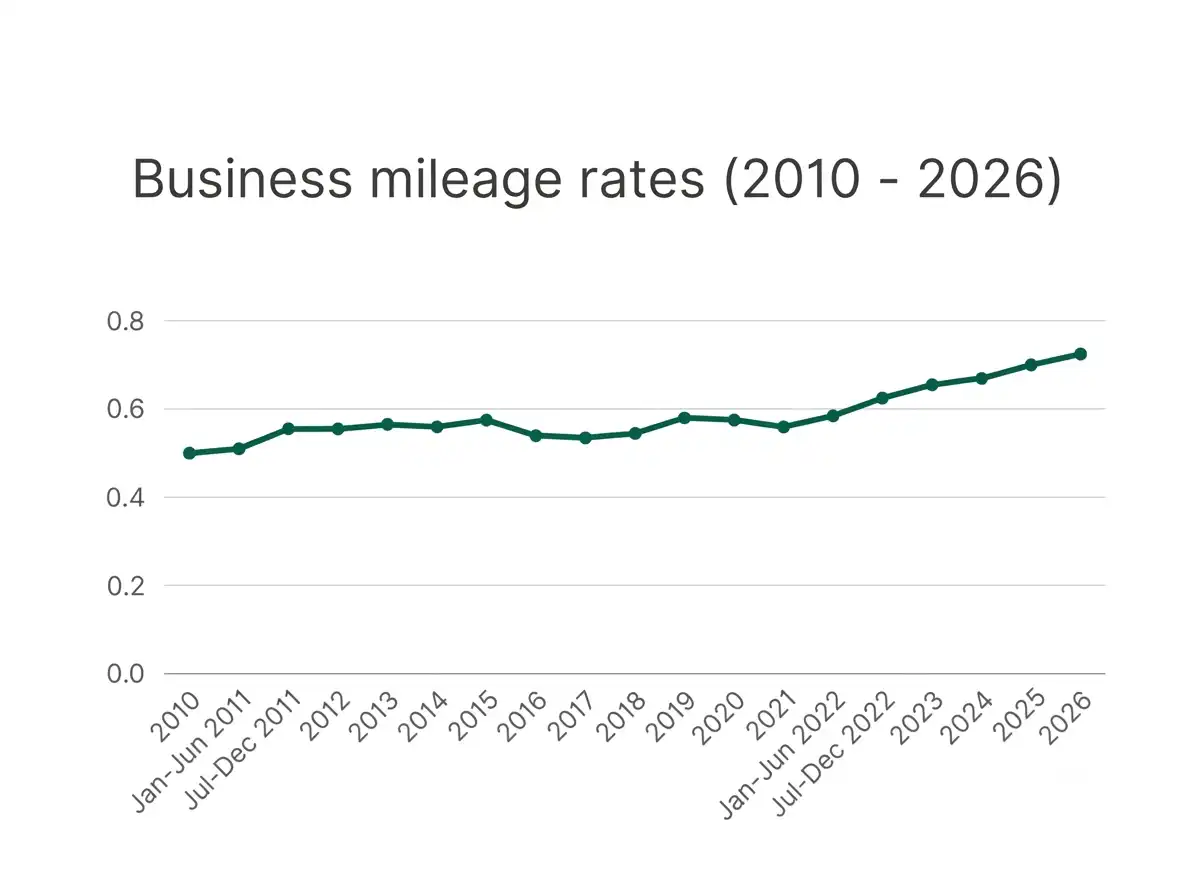
Ultimate Guide to the IRS Mileage Rate 2026
Hello! If you use your private car for work, for running errands on behalf of a charity, or to attend medical appointments, you could be overlooking a valuable amount of tax deductions or company reimbursements. However, in order to claim that money you'll need to know the IRS mileage rate 2026. Each year the Internal Revenue Service establishes these figures so that people who drive have a straightforward method of working out the cost of operating a vehicle without having to keep track of every single receipt for petrol, oil changes, and new tyres.
The subject of taxes can seem rather serious, but we're going to go over it just as two friends do when having a chat over a cup of coffee. We'll examine in detail how the IRS mileage rate works, what the current figures are, and also look at how you can keep track of your miles so that you don't end up left behind when tax time comes around.
What is the actual standard mileage rate?
Using your car for any purpose other than your usual daily commute results in a financial cost. The government is aware of this fact, which is the reason why there is an IRS mileage rate. This rate is optional and fixed at a certain number of cents per mile and is used to cover both the variable and the fixed costs of running a car, van, pickup, or panel truck.
Rather than keeping records of each dollar you spend on fuel, insurance, depreciation, and maintenance, you only need to record the miles you drive. When the year is over, you multiply the total number of qualified miles by the rate approved for that kind of trip. This means a huge amount of bookkeeping time is saved for small business owners, independent contractors, and gig workers.
You do have the option of choosing between the standard rate and keeping a record of your actual expenses. Since the standard rate is considerably easier to use, most people who drive every day go with it, especially if they have a fuel-efficient vehicle.
Understanding the Component Rates
The IRS doesn't give out just one figure for all situations; instead it divides its mileage rate into separate categories according to the reason for the driving. The rules and the amounts in question depend on whether you are driving while working for a business, assisting a nonprofit, or going for medical treatment.
Business miles: It is the highest rate and is intended for the purpose of covering the costs of gas, oil, tires, insurance, repairs, and general vehicle depreciation.
If you need to drive a long distance in order to access specialized healthcare or to have frequent appointments with your doctor, you are allowed to deduct those miles in order to alleviate the financial strain.
The situation regarding military moves is that only military personnel who are currently serving can qualify for this particular category if they are moving as a result of a permanent change of station order.
If you drive to a 501(c)(3) nonprofit in order to volunteer, you are allowed a deduction, but this deduction rate is set by Congress and seldom changes.
The Mid-Year Shift and Current Numbers
Vehicle costs have the potential to change quickly when global events cause disturbances in the oil markets. Usually, the government fixes the rate once a year, but there are cases in which it makes a mid-year adjustment if fuel prices surge. For example, a close examination of recent data shows that the IRS mileage rate had a two-part breakdown during the calendar year.
For the first six months of the year (from January 1st to June 30th) the business rate was 72.5 cents per mile; but because of the increasing cost of fuel the IRS raised the business rate to 76 cents per mile for the second half of the year (from July 1st to December 31st). The rates for medical and military moving travel also increased from 20.5 to 23.5 cents per mile halfway through the year. The charitable rate remained entirely unchanged at 14 cents per mile throughout the year, as it always has.
What that implies is that when you're preparing your taxes for this period you can't apply a single multiplier for the entire year; instead you must refer to your calendar, divide your mileage record into two separate parts, and use the appropriate historical rate according to the specific date of each of your trips.
Standard Mileage Rates as Against Actual Expenses
It is helpful to understand the two main routes available for vehicle deductions if you are attempting to decide how to file.
When you take the standard option, you have to decide to use the IRS mileage rate in the first year that the vehicle is available for business use. Once you have missed that opportunity with a car that you own, you will be committed to the actual expense method for the full life of that vehicle. In the case of leased vehicles, if you select the standard rate then you must continue with it for the whole length of the lease.
Strict Rules for Tracking Your Miles
The IRS is very strict regarding documentation, so if you are ever audited you won't get away with just making up your mileage at the end of the year; you need an official mileage log that is kept at the time it occurs.
To keep your deduction safe, ensure your records contain these four vital pieces of information for every single trip:
- When is your trip?
- The total number of miles that were driven.
- The place or physical location that you went to.
- The clear business or charitable object of the drive.
A lot of today's drivers give up on using paper notebooks and instead choose automated smartphone tracking apps. The apps work in the background, record your routes using GPS, and let you swipe left when entering a personal trip and right when entering a business trip, thus producing a smooth digital report.
What is considered a deductible mile?
A frequently misunderstood point is just what counts as a business mile. The one thing you must remember is that commuting is never deductible; the IRS treats a trip from your home to your regular and permanent office building as a personal expense, regardless of how far away the office is or how bad the traffic is.
But if you leave your usual office to go and see a client, go to a conference in another part of the city, or collect some inventory from a warehouse, the driving you do during the day is completely deductible according to the IRS mileage rate rules. When you are an independent contractor who carries out all your work from a qualified home office, your home is considered to be your main place of business. In that particular case, the journey from your house to meet a client is entirely deductible since you are traveling between two business locations.
FAQs
1.May I claim a deduction for the miles I drive as part of my usual daily commute to work?
You cannot, because the IRS considers the drive you make each day from your home to your main place of work as a personal commuting expense and therefore one which is fully non-deductible.
2.What would occur if my company paid me a sum that was less than the official IRS rate?
Employers are only required by the federal government to match the IRS rate if the cost of the vehicle causes your net pay to fall below the minimum wage; in that case, the reimbursement remains tax-free up to the official rate.
3.Shall I change from the actual expense method to the standard rate at a later stage?
You can only use the standard mileage rate in the first year that you used the vehicle for business. Once you have started keeping records of actual expenses, you won't be able to switch back to the standard rate for that car.
4.Does the standard mileage rate cover tolls and parking fees?
The standard rate only includes the cost of running the vehicle, and you can in fact deduct parking charges and tolls separately in addition to your mileage deduction.
Ready to Scale Your Business?
Connect with our experts to learn how our outsourcing solutions can drive growth.
BOOK A DISCOVERY CALL